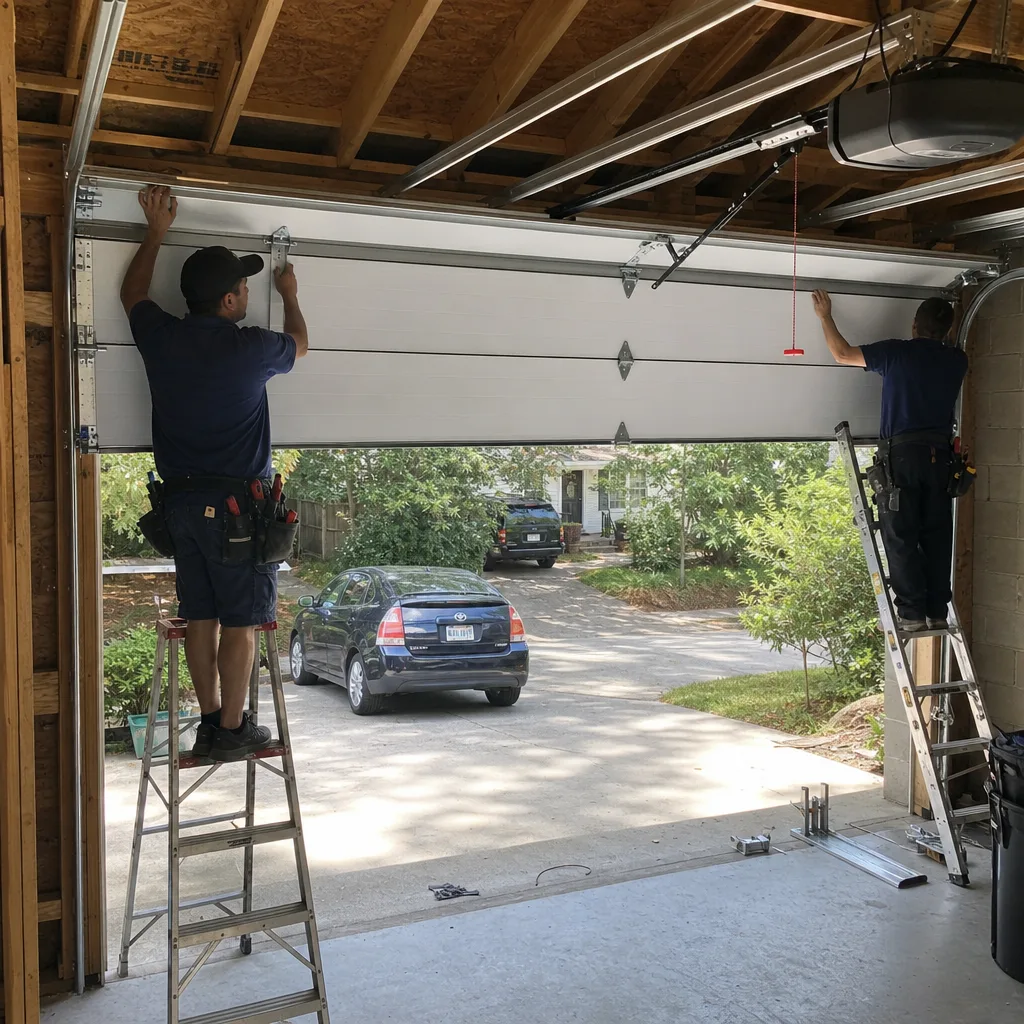
Last updated November 23, 2026
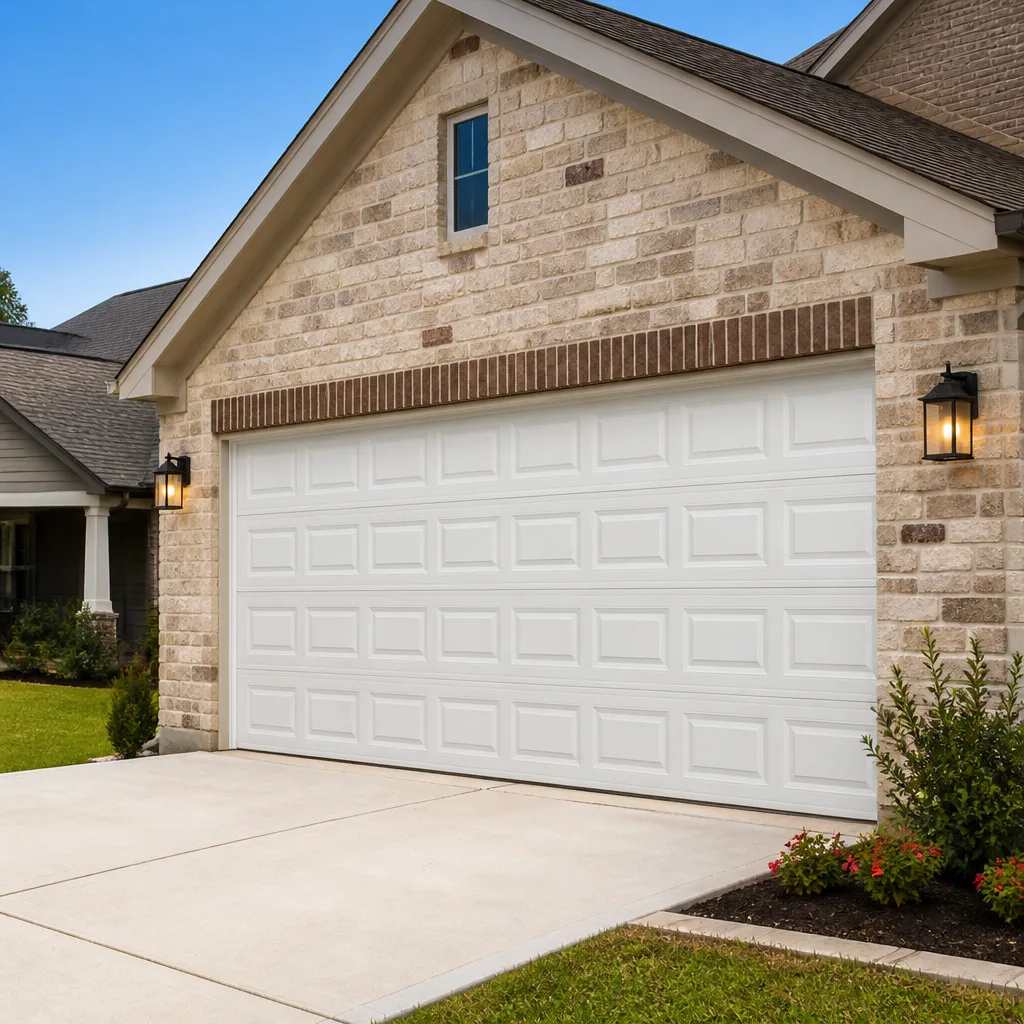 Raised-panel steel
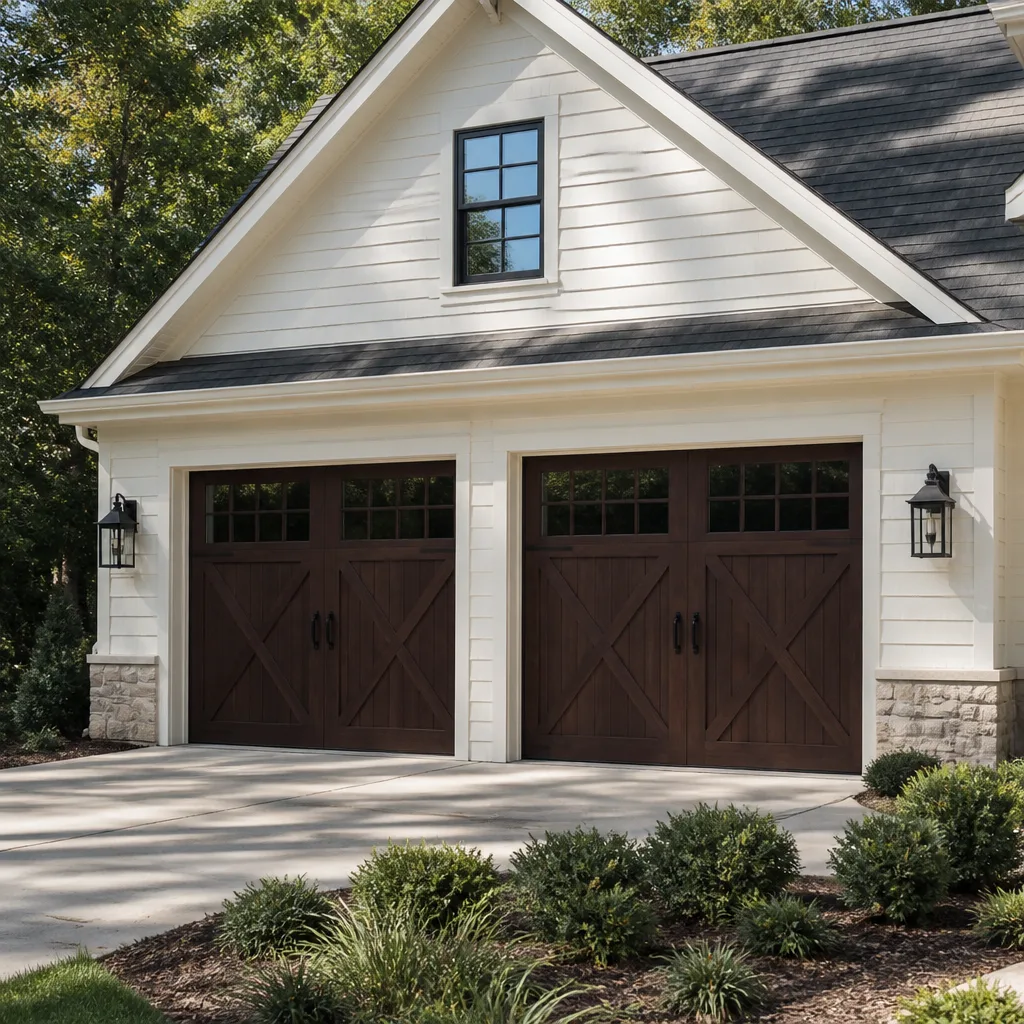 Carriage house
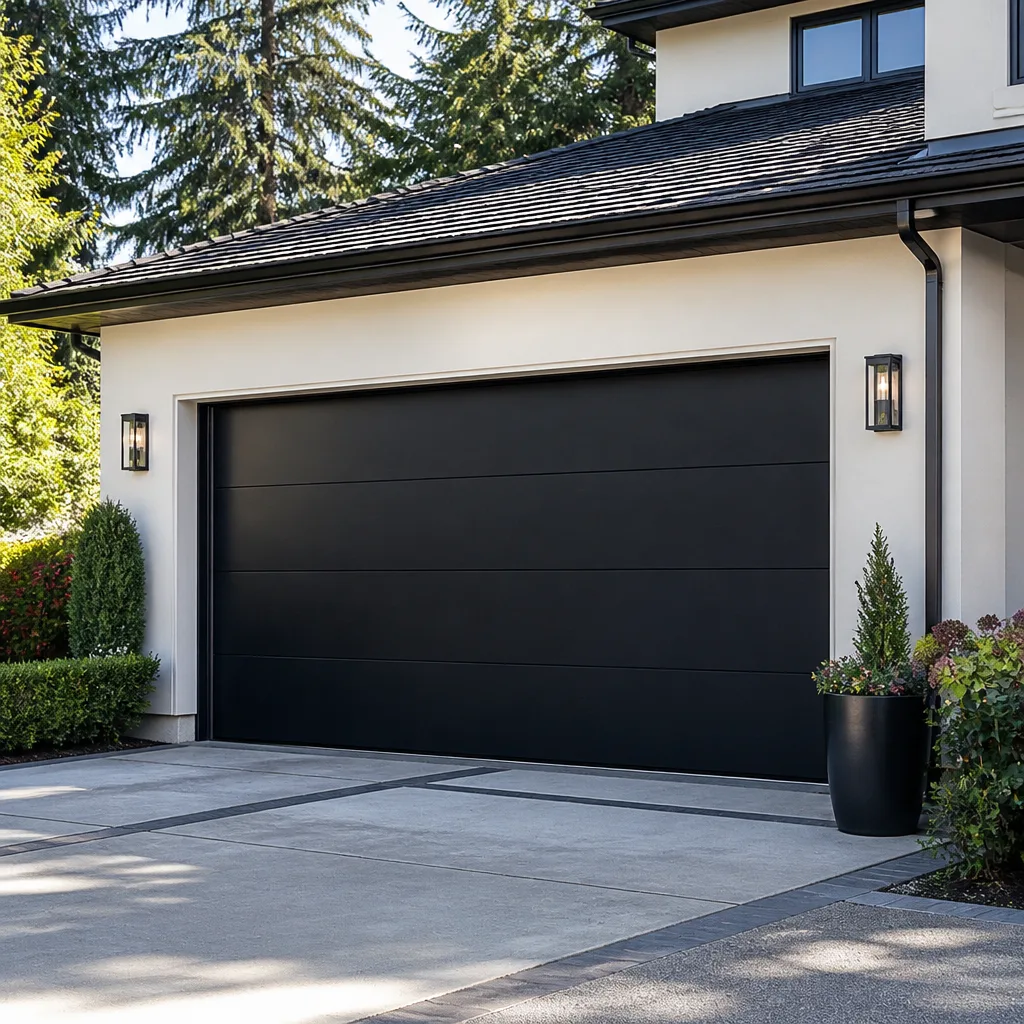 Modern flush
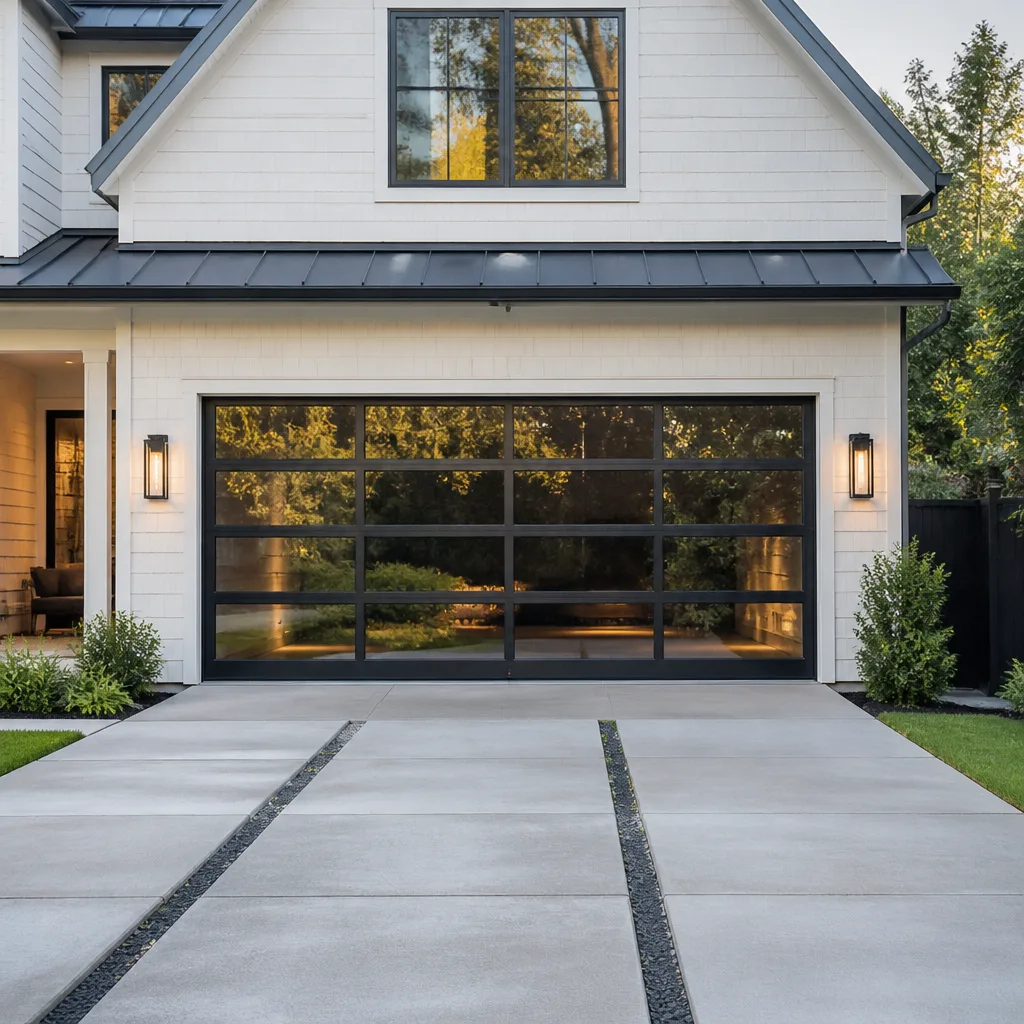 Full-view glass
 LiftMaster openers
 Chamberlain openers
Full 25-point door and opener safety check with every visit - springs, cables, rollers, tracks, and your LiftMaster or Chamberlain opener included
You get a price before we start. It does not change when the pro arrives.
Get your free estimateGarage Door Repair Troubleshooting in Virginia-Highland: Common Problems and How to Fix Them
A garage door that “just stopped working” is almost never a mystery. The direction it fails, the sound it makes, the place where it sticks – each detail points at a specific component with surprising precision. Most homeowners misread those clues, though, and reach for the wrong fix. Some spend money on an opener they didn’t need. Others put their hands somewhere genuinely dangerous. In the sections below we map six mechanical failure patterns, explain which local conditions in Virginia-Highland speed certain problems along, and flag the exact moments troubleshooting should stop and a trained technician should take over.
Quick Answer
Most garage door failures trace back to one of six root causes: a broken torsion or extension spring, a worn or misaligned track, a frayed or off-drum cable, a failed opener gear or logic board, a jammed or bent roller, or a misadjusted safety sensor. The symptom you see tells you which of the six you’re likely facing. If the door is stuck, crooked, or makes a sharp bang, stop and call a trained professional – spring and cable work is the leading cause of serious garage door injuries.
Styles & brands we work with
- Raised-panel steel
- Carriage house
- Modern flush
- Full-view glass
- LiftMaster openers
- Chamberlain openers
Table of Contents
- Symptom-to-Component Diagnostic Matrix
- Tension-Side vs. Motor-Side Failures
- How Virginia-Highland Weather Accelerates Wear
- Safely Releasing a Stuck Door
- The Stop Signs: When DIY Becomes a Liability
- Working With the Brand You Already Own
- Preventive Checks That Keep Virginia-Highland Doors Running
- When to Call a Professional
Before we get into the diagnostics, a word on how to use this guide. Troubleshooting is about narrowing down where the failure lives. It is not about performing the repair yourself. For sensor, roller and opener-logic issues a homeowner can often handle the fix. For anything involving tension – springs, cables, drums, the torsion bar – the answer is always the same: call a specialist. That line is not a sales tactic. It is the line every reputable garage door technician draws, and it exists for a reason we’ll spell out in detail later.
Symptom-to-Component Diagnostic Matrix
The fastest way to troubleshoot a garage door in Virginia-Highland is to match the exact behavior to the component most likely behind it. Here is the matrix we go through first whenever we take a diagnostic call.
If the door won’t open at all
Start with the simplest checks. Is the opener getting power? Is the wall control lit? Does the safety sensor beam show green on both sides? A dead wall button or blocked sensor can look exactly like a dead motor. If the opener hums but nothing moves, the motor is trying but the mechanism is stuck – which usually points to a broken spring or a snapped lift cable. That’s the moment to stop testing and call.
If the door opens a few inches and stops
Partial opens almost always mean the motor is fighting a broken spring it can no longer lift against. On a properly balanced door, a strong adult can lift it by hand. If your door feels like a dead weight when released, the spring is the culprit. A failing opener gear (common on older Genie and Craftsman units) can produce the same symptom, so listen for gear grinding before you assume springs.
If the door reverses immediately after touching the floor
This is a sensor or force-setting problem nine times out of ten. Check that both safety sensors are aligned, unobstructed, and clean – dirt on the lens after a windy stretch or pollen season is common in this part of Atlanta. If sensors check out, the opener’s down-force limit may be set too low. Older openers sometimes need a small limit adjustment; if that doesn’t fix it, the logic board may be failing.
If the door opens but won’t close
Same sensor suspects first. If the beam is fine, look at the door’s path: a bent track, a roller popped out of its channel, or an obstruction in the track can trigger the opener’s auto-reverse. On Virginia-Highland homes with tight single-car garages, a slightly misaligned track after seasonal settling is a frequent cause. A visible kink in the track near a bracket usually confirms it.
If the door is crooked or lopsided
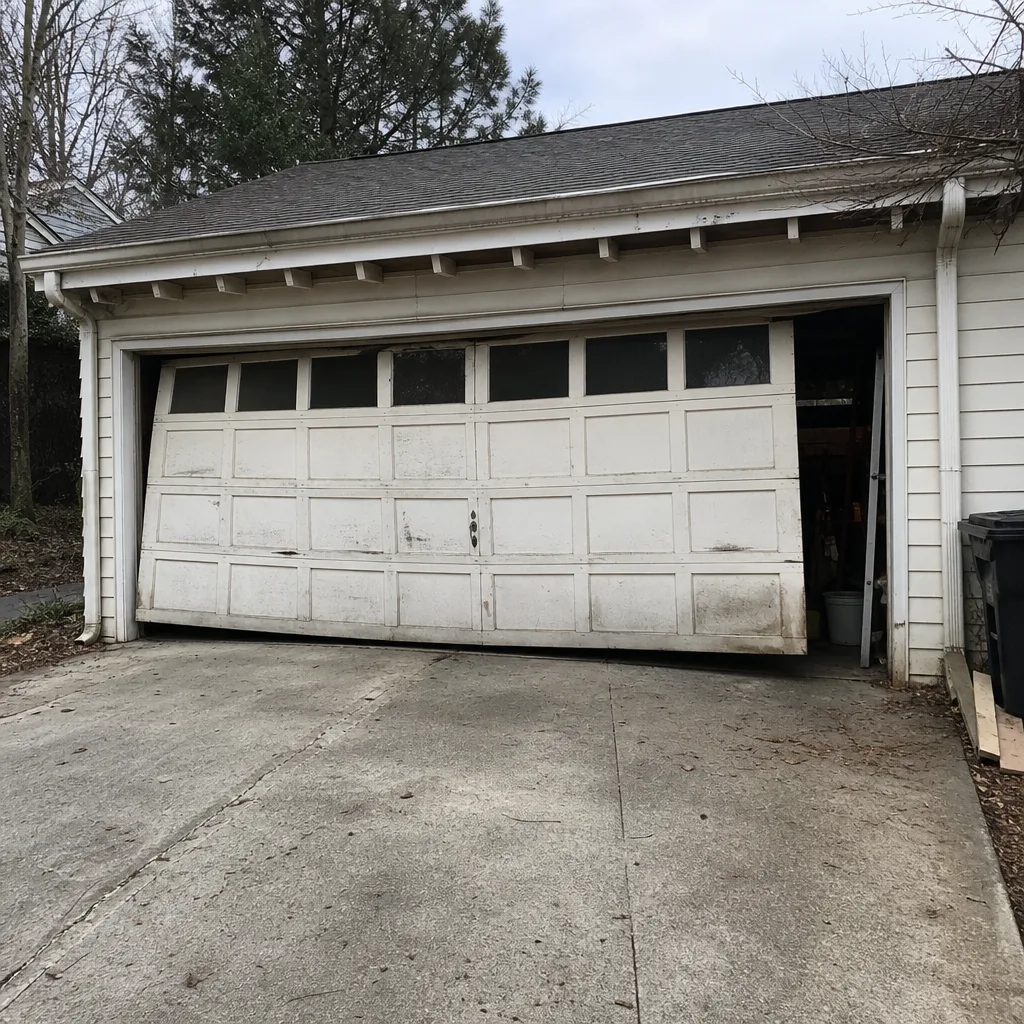
One side higher than the other is a cable or drum problem – specifically, a cable that has jumped its drum or broken on one side. Do not run the opener. The door is being held up unevenly and can crash. If the door is stuck closed, a trained professional can safely disengage it. This is a stop-and-call scenario.
If the door is noisy but works
Grinding, squealing or banging doors usually point to dry rollers, worn hinges, or a torsion spring that has begun to bind. It’s the least urgent of the six patterns, but ignoring it turns a $20 part into a $200 repair later. Lube your rollers and hinges with a garage-door-specific lubricant (not WD-40) once a year and listen for changes.
Tension-Side vs. Motor-Side Failures
The single most expensive troubleshooting mistake we see is confusing a tension-side failure with a motor-side failure. They produce nearly identical symptoms. They require completely different (and very differently priced) repairs. And because a motor sounds like it’s “trying,” many homeowners assume the opener is the problem when it is actually working exactly as designed against a broken spring it cannot lift.
What tension-side failure looks like
- Door won’t open, opens partway, or drops unexpectedly
- A sharp bang from the garage, followed by a door that won’t lift
- Door feels extremely heavy when lifted by hand
- Visible gap in a torsion spring, or a stretched extension spring
- Cable hanging slack on one side or wrapped oddly around the drum
- Door crooked in its tracks
What motor-side failure looks like
- Opener hums or clicks but door doesn’t move at all, or barely twitches
- Motor runs but door stays put – and door is light when tested by hand
- Opener runs continuously and doesn’t shut off
- Remote works intermittently or not at all, wall button still works
- Limit switches seem off (door stops short of the floor or runs past it)
- Grinding sound from inside the opener housing
Here’s the test that separates them. Disengage the door from the opener using the manual release (we cover this in detail below), then try to lift the door by hand. If it lifts easily with one hand, the springs and cables are fine and the problem is motor-side. If it feels like lifting a small car, the tension side is broken and the opener is innocent. Either way, if the door won’t lift by hand, don’t force it – re-engage the door and call a technician for assessment of the tension side.
Why does this matter in dollars? Because a homeowner who misreads a tension failure as a motor problem buys an opener replacement they didn’t need. And a homeowner who misreads a motor failure as a tension failure starts probing springs, which is when serious injuries happen. Our garage door repair calls frequently start with the tension-vs-motor test precisely because getting this wrong is the most expensive, most dangerous troubleshooting error in the trade.
How Virginia-Highland Weather Accelerates Wear
Garage doors on Atlanta’s near-northeast side live in a particular climate mix that puts specific components at risk. Virginia-Highland sits in a humid subtropical zone with sticky summers, damp shoulder seasons, and winters that swing between warm afternoons and near-freezing nights without much warning. Those swings do more damage to a garage door than any single season does.
Humidity and track rust
Summer humidity in this neighborhood runs high for months at a time. Steel tracks, hinges and rollers can rust slowly and quietly, especially on doors facing north or shaded by mature trees. The rust doesn’t usually break anything outright – it makes the door run stiffer, which makes the opener work harder, which shortens the life of the motor and the springs. Homes in the older sections of Virginia-Highland, where garages often sit under trees with heavy summer leaf cover, tend to see this sooner. A light coat of lubricant on rollers and hinges each year is the single best deterrent.
Temperature swings and cable fraying
Cables expand and contract with temperature changes. Over many seasons, the individual strands inside a lift cable can fatigue and begin to fray, especially where the cable bends around the drum. A cable with just one or two broken strands is a warning sign, not a working part. If you see fuzz or stray wire along the length of a cable, that door needs professional attention before the cable fails. This is one of the few genuine garage door emergencies – a snapped cable can whip with dangerous force.
Seasonal settling and track misalignment
Atlanta’s clay-heavy soil moves with moisture, and Virginia-Highland’s older homes and driveways flex more than newer construction does. That settling can throw a garage door out of alignment – tracks that were perfectly adjusted in spring can slip out of true by fall. A door that reverses for no apparent reason in autumn is often just a track that’s a half-inch off after seasonal movement, not a failed opener.
Summer heat and spring fatigue
Torsion springs get a workout every time the door moves, and Virginia-Highland’s hot summers mean more cooling cycles, more door use, and more cycles on the springs overall. If your door is 8-10 years old with daily use, the springs are closer to the end of their rated cycle life than you might think. We recommend having the springs inspected once a year after that age.
Safely Releasing a Stuck Door
When a door is stuck – in the closed position, in a half-open position, or in a state where the opener is fighting back – the right manual release saves you from damaging the trolley and saves the technician from a harder repair. The release mechanism is the red cord (or handle) hanging from the opener rail, and it’s meant to be pulled gently and deliberately. It is not a shove-and-pray operation.
Step-by-step: manual release when the door is CLOSED
- Unplug the opener from its ceiling outlet. This removes any chance of the motor kicking on while the door is disengaged.
- Stand clear of the door’s path – off to the side, not underneath.
- Pull the red release cord straight down with a firm, steady tug. It should detach the trolley from the door’s carriage with a click.
- Test the door’s weight by hand. Lift slowly, a foot or two, and feel how heavy it is. If it will lift easily with one hand, you can safely operate it manually until the technician arrives. If it feels like a boulder, lower it immediately and don’t try again.
- If the door is heavy and cannot be lifted, leave it in the closed position, re-engage the trolley if you can, and call for emergency service. Forcing a heavy door up or down is exactly how cable and drum damage (and personal injury) happens.
Step-by-step: manual release when the door is PARTWAY OPEN or STUCK
- Do not stand under the door. This cannot be emphasized enough – a partial-open release on a broken-spring door means the door’s weight is about to fall.
- Unplug the opener first, then pull the red cord.
- Let the door down slowly if it will lower under control. If it drops freely, get out of the way and let it come to the floor. A free-falling door means the spring is broken and the brake isn’t engaging.
- Once the door is down and the operator is unplugged, call for emergency garage door repair.
Two things kill trolleys and cause needless damage during these releases. First is yanking the cord hard or at an angle – the trolley can jam on the rail. Second is re-engaging the trolley while the door is open. When you try to close the door with the opener while the trolley is disengaged, the opener carriage slams into the door’s carriage bracket, and both get damaged. If you release the door, leave it disengaged until a technician checks it.
When the door won’t move at all and you need it secured, garage door repair Virginia-Highland handles emergency calls for stuck doors and failed springs. It’s worth having the number stored on your phone before you ever need it.
The Stop Signs: When DIY Becomes a Liability
There are a handful of moments in garage door troubleshooting where the correct answer is not “try another fix” – it is “call a trained technician.” These are not judgments about your competence. They’re the moments when the risk of serious injury outweighs any savings.
Stop immediately if…
- The spring is broken or you suspect it. Torsion springs are under extremely high tension at all times. A single wrong turn on a winding bar can send it flying with enough force to break bones. This is the reason many handymen decline spring repairs outright. Spring failure is a safety issue, not just an inconvenience – it is a safety-critical job for trained hands only.
- A cable is broken, frayed or off its drum. Lift cables are under the same tension and can whip violently. Even inspecting a broken cable up close without gloves and eye protection is dangerous.
- The door is crooked or one side is hanging low. The door is being held up unevenly by two independent systems, and the weak side may give way.
- The door fell or dropped unexpectedly. Even once is enough. A door that has dropped has a failure mode that hasn’t been diagnosed, and running it again risks a repeat.
- The door is jammed in a way that requires lifting it by force. Forcing a stuck door bends tracks, snaps cables, and can drop the door on whoever is under it.
- You’re working from a ladder near the opener rail. Garage doors have moving parts above your head at heights that invite a fall.
- The door is over 30 years old with original springs. Older tension systems, especially on doors installed in some of Virginia-Highland’s mid-century homes, sometimes have extension springs without safety containment cables. These can travel with dangerous force.
The line is simple: sensors, remotes, wall buttons, rollers and light bulbs are homeowner-troubleshooting territory. Springs, cables, drums, brackets and torsion bars are not. A trained specialist knows the difference because they see the consequences of the wrong call. In our experience, every garage door technician who’s been doing this work has a story of a homeowner who nearly lost fingers to a spring. That’s why we advocate the stop sign so firmly.
Working With the Brand You Already Own
One of the quieter frustrations in garage door repair is calling a company and finding out they only want to work on the brands they install. A Clopay door with a Genie opener might get a shrug. A Raynor opener gets “we don’t carry those parts.” That is a sign of a generalist, not a specialist.
We work on the brand you already have. Our technicians service and repair doors and openers from LiftMaster, Chamberlain, Genie, Clopay, Amarr, Wayne Dalton, Craftsman and Raynor – eight of the most common brands on the market. That matters because Virginia-Highland’s housing stock is mixed: some homes have brand-new Amarr doors, some have original Wayne Dalton doors from the 1990s, and some have openers from brands that stopped making parts a decade ago. Diagnosing the door in front of you, rather than just the brand you prefer to sell, is what keeps repair costs down and keeps doors out of the dumpster unnecessarily.
If you’re troubleshooting a specific brand and the fix involves the opener rather than the door itself, our garage door opener repair guide covers brand-specific quirks in more depth. If the door is beyond economic repair – rare, but not unheard of on very old units with failing panels and multiple component failures – a garage door installation may be the better path. Either way, one call covers it. You don’t have to figure out which path is right before you pick up the phone.
Preventive Checks That Keep Virginia-Highland Doors Running
Most of the emergency calls we take in Virginia-Highland could have been prevented by ten minutes of attention twice a year. Here’s the routine we recommend.
Monthly (two minutes)
- Look at both safety sensors – the small lights must be on and steady, not blinking. Wipe the lenses with a soft cloth.
- Run the door up and down once while watching the springs and cables. Look for gaps in springs or slack in cables.
- Listen for new sounds – grinding, popping, squealing.
Twice a year
- Apply garage door lubricant to rollers, hinges and the torsion spring’s bearing plates (not the spring coils themselves).
- Test the auto-reverse: place a roll of paper towels on the floor under the door’s path and confirm the door reverses when it hits it.
- Tighten any loose hinge or bracket bolts – gently. Overtightening can strip hardware.
- Check for rust on tracks and hinges. A light rust film can be cleaned with a wire brush and coated with lubricant.
Yearly (or after spring age passes 8 years)
- Have a technician inspect the springs, cables and drums. Spring cycle life can be measured mentally as “how many times a day does the door run, times how many years” – a door that cycles 6-8 times a day on average hits typical cycle life faster than occasional-use doors.
- Balance test: release the door from the opener and lift it halfway. It should hold in place. If it drifts or falls, the springs need professional adjustment.
- Check the door’s weather seal at the bottom. A cracked seal lets in water, which starts rust on the track.
If you notice one side of your door runs smoother than the other, or the door seems to fight the opener on cold mornings, don’t wait for a full failure. A small adjustment now often prevents a broken spring or fried opener later. If the opener itself starts behaving oddly – blinking lights, losing remote programming, running past the floor – it’s time to call.
Common Mistakes to Avoid
- Spending money on the opener before testing the spring. Before you shop for a new opener, disengage the door and lift it by hand. If it’s heavy, the opener is fine and the springs are broken. Many Virginia-Highland homeowners have replaced a working opener because they skipped this test.
- Pulling the manual release while standing directly under the door. A door that hasn’t been tested by hand can free-fall once released. Always test the weight first, and always stand to the side – never underneath.
- Using WD-40 on the tracks. It attracts dust and debris that gum up rollers. Tracks shouldn’t be lubricated at all – only the rollers, hinges and spring bearing plates. Use a garage-door-specific lubricant.
- Ignoring a small cable fray. A cable with even one broken strand is a working catastrophe. Frays are a warning sign and often lead to a full snap within weeks. Don’t push a frayed cable through a whole season.
- Re-engaging the trolley while the door is open. If you release the door and want to reconnect it, the door needs to be in the fully closed position first. Otherwise the trolley can slam into the door’s carriage bracket and damage both.
- Adjusting torsion springs without training. This is the number one cause of serious injury in the trade. Springs are wound to hundreds of pounds of tension. A single slip can be catastrophic. No amount of online guidance substitutes for training on this specific component.
- Letting seasonal track drift go unaddressed. Atlanta’s soil movement means tracks can slip out of alignment more than in drier climates. If the door has started reversing for no visible reason, check the track alignment before assuming a sensor problem.
- Forgetting that spring failure can be silent. A spring can break overnight while the door is closed, and the first sign is the “opener hums but door won’t move” symptom the next morning. If the opener is running but nothing’s happening, spring first, opener second.
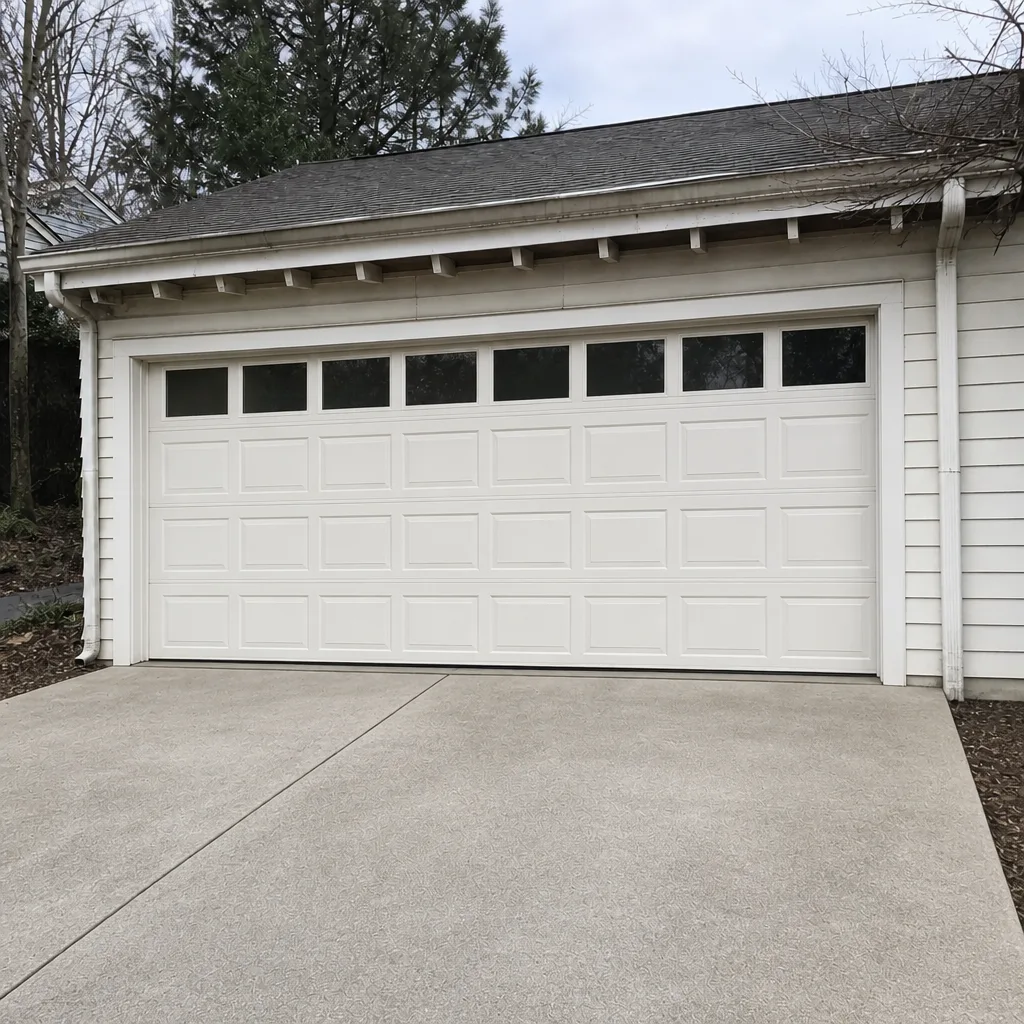
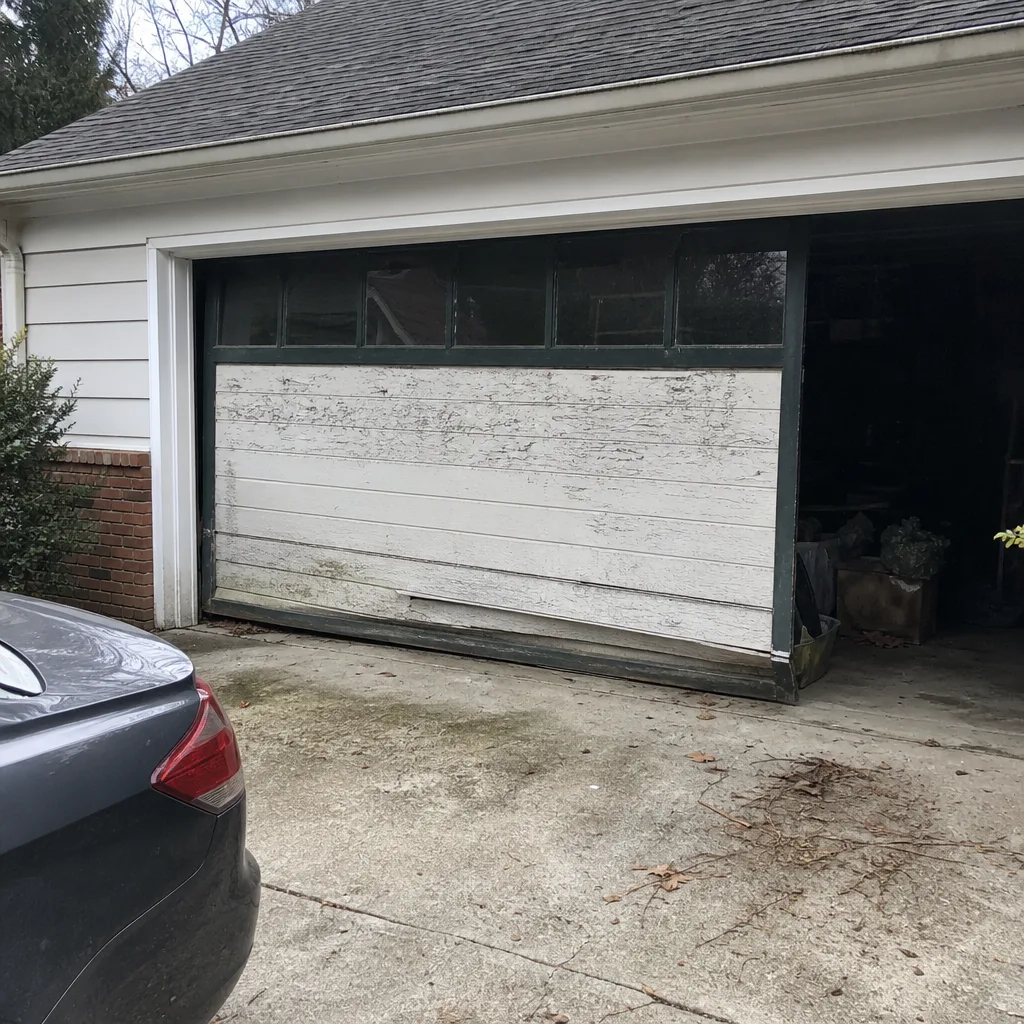
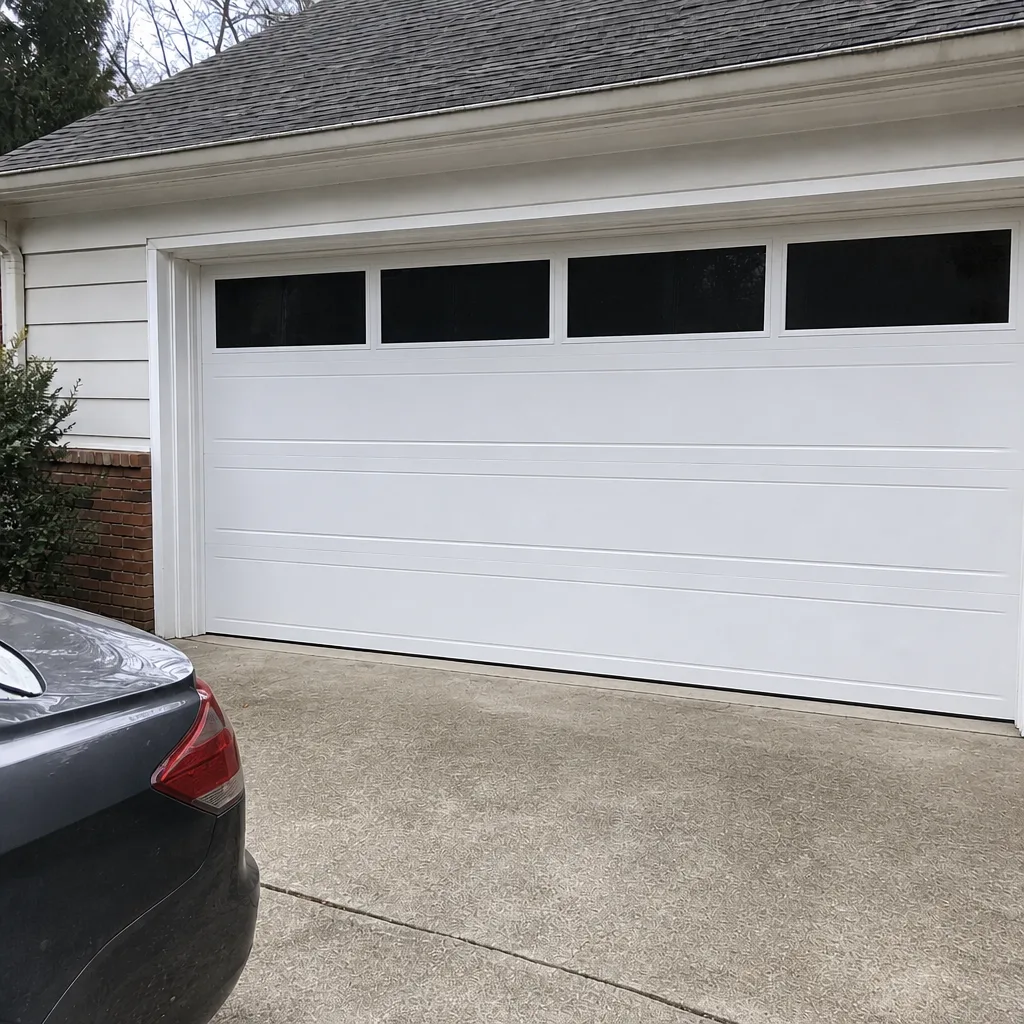
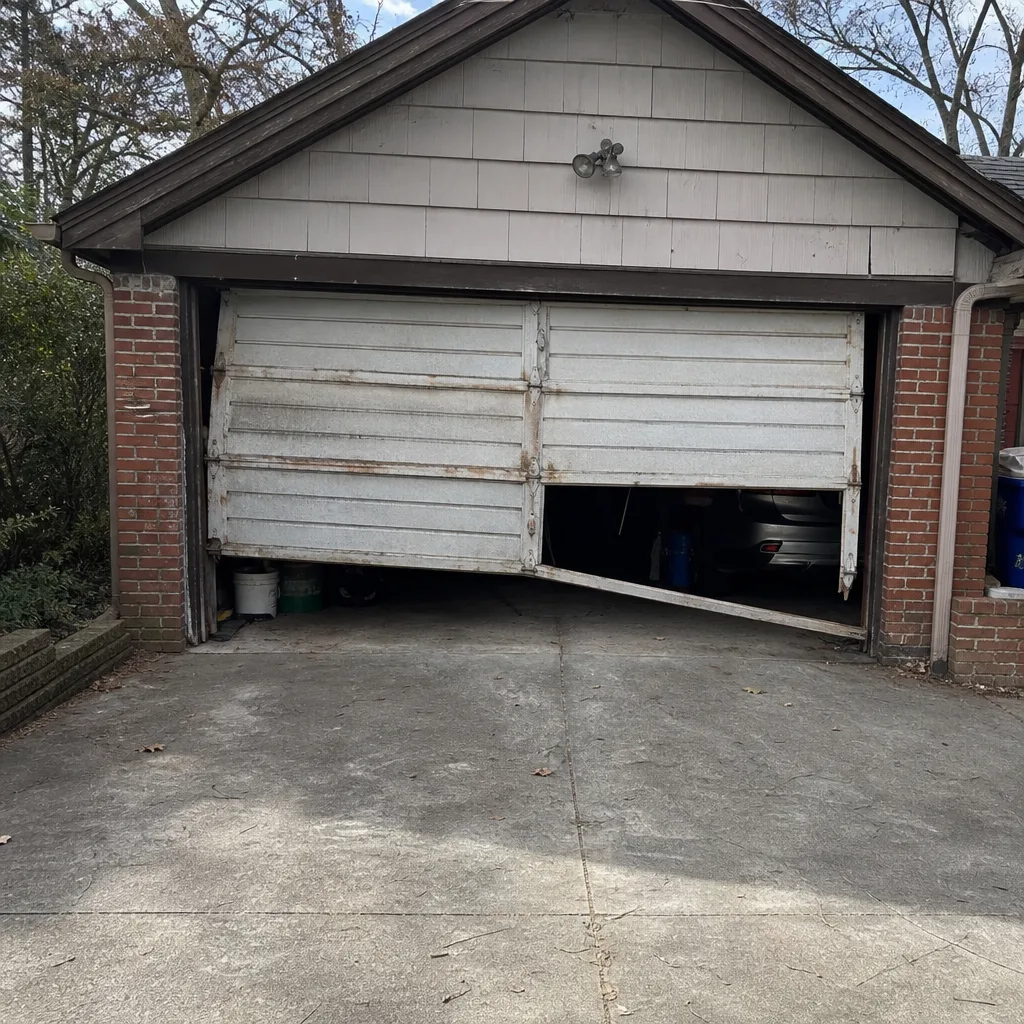
See the difference
 Before
 After
 Before
 After
 Before
 After
When to Call a Professional
Call a trained technician the moment any of the following are true: a sharp bang has come from the garage, a spring is visibly broken, a cable is frayed or hanging, the door is crooked, the door won’t lift by hand after disengaging, or the opener runs continuously without moving the door. These are the six situations where DIY troubleshooting becomes a real safety liability. If you’re unsure whether you’re in that category, err on the side of calling – a diagnosis is free, and a mistake is not.
For everything else – sensors, remote programming, wall button failures, noisy rollers, minor track alignment – the stop-and-call line is less urgent, but a professional inspection will still save you time. Garage Door Repair Virginia-Highland offers free estimates in Virginia-Highland – call (866) 937-7146. Our technicians have up to 15 years of experience, and they diagnose the door in front of them rather than the door they’d prefer to sell. Emergency garage door service is available for stuck doors and failed springs. When the door won’t move, we move fast.
Frequently Asked Questions
Typical repair costs in Virginia-Highland depend entirely on which of the six failure patterns you’re facing – a sensor realignment is far less expensive than a spring replacement, which is a named specialty repair and priced accordingly. Call (866) 937-7146 for a free estimate; the written quote you receive before any work begins sets the final price. We work from that number, not from a range.
Yes, for stuck doors and failed springs we offer emergency garage door service. When the door won’t move, we move fast, and we can usually get a technician out the same day for urgent calls. For routine repairs and non-emergency troubleshooting, we schedule the earliest available slot and quote the price before we start.
It is not an exaggeration – spring failure is a safety issue, not just an inconvenience. Torsion springs are wound to hundreds of pounds of tension and can release that force with enough violence to break bones. Never try to wind, unwind, or remove a spring yourself. This is exactly why many general handymen decline spring repair: it takes training and specific safety procedures.
No – the price you agree to before work starts is the price you pay. Our technicians quote in person after inspection, and you approve the number before any work is done. If the diagnosis changes as work progresses (rare, but happens when a secondary component turns out to be damaged), the technician stops and re-quotes before continuing. You never get a surprise invoice.
The local professionals we connect you with are licensed and insured as their state requires, and they work on garage doors only. Garage doors are all we do – every service is within the trade, so the technician who arrives is a specialist rather than a generalist splitting attention across unrelated home repairs.
Almost certainly. We’re factory-familiar with eight of the industry’s top brands: LiftMaster, Chamberlain, Genie, Clopay, Amarr, Wayne Dalton, Craftsman and Raynor. Whether you’re troubleshooting a modern Amarr door or an older Wayne Dalton, we diagnose and repair the door you already have. Call (866) 937-7146 with your brand and symptom for a fast diagnosis.
The Bottom Line
Garage door troubleshooting comes down to matching the symptom to one of six mechanical failure patterns. Once you know which pattern you’re facing, the fix is usually clear – and so is the safety line. Sensors, remotes, rollers and wall buttons are homeowner territory. Springs, cables, drums and torsion bars are not. The single most useful test you can run is the hand-lift test after disengaging the door: if it’s heavy, the tension side is broken, and it’s time to call. If your door is stuck, noisy, crooked or won’t move at all, a specialist diagnosis is the fastest path back to a working garage in Virginia-Highland.
For a free estimate on any garage door problem – repair, opener, spring or full installation – call Garage Door Repair Virginia-Highland at (866) 937-7146. One call covers it. When the door won’t move, we move fast.
Written by the team at Garage Door Repair Virginia-Highland.